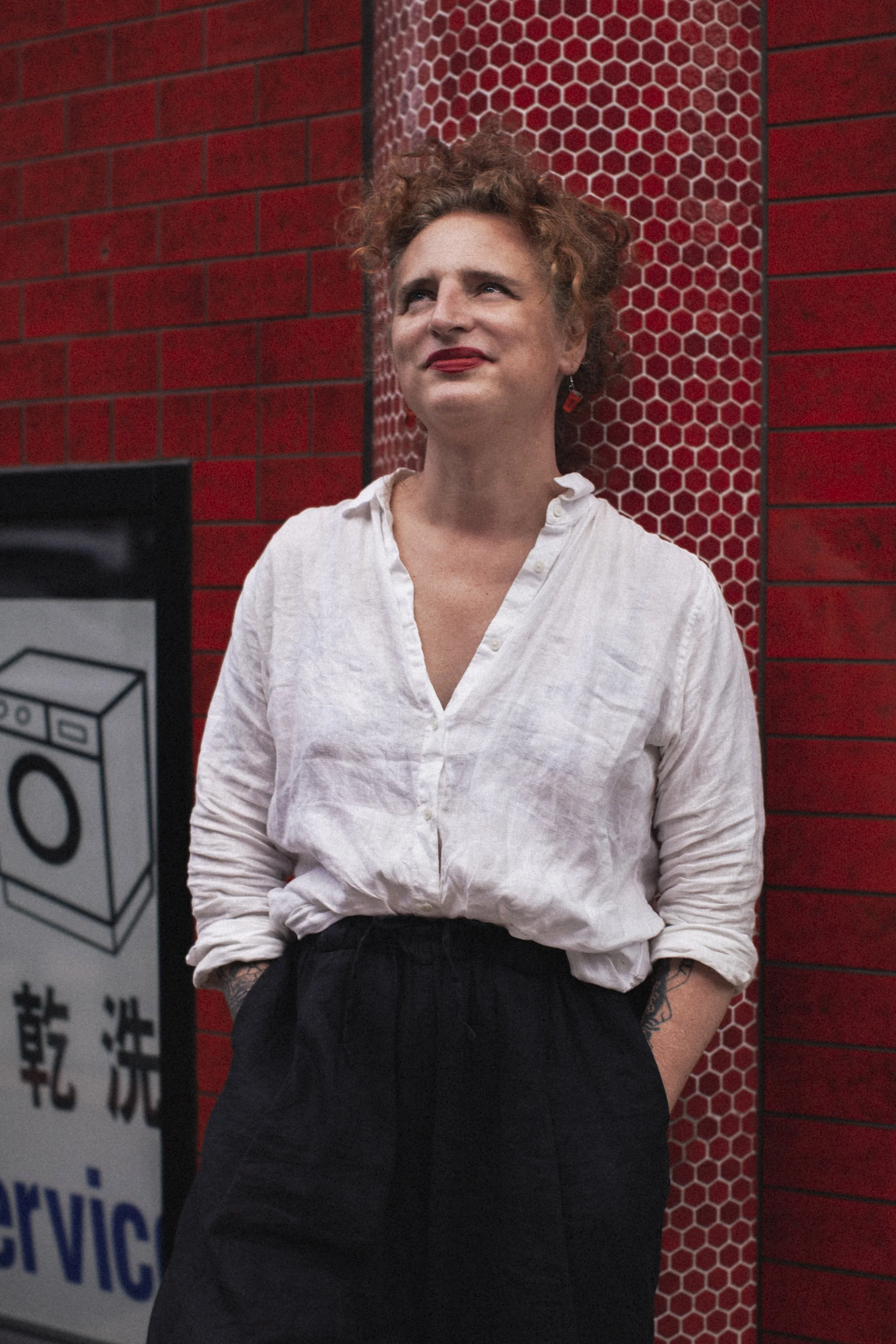
Photo: © Ammo Bankoff
I’m an award-winning scientific illustrator and animator with 30 years of experience in the field.
I was raised in New York City in the 1970s and ’80s. Though my parents were both visual artists, I was drawn to music. Thousands of hours of practice on the tenor sax led me to LaGuardia High School of Music & Art, and by my late teens, I was gigging around NYC in the early ’90s jazz scene while attending Manhattan School of Music. But a repetitive stress injury from practicing and general burnout overwhelmed my love of music, and I put the horn down in my early 20s.
In 1997, I took a job as assistant art director at the magazine Scientific American. My two years on staff there dramatically altered the course of my life. The editors I worked with shared a passion, a fire, a pursuit of something higher that reminded me so much of the musicians and artists I’d grown up around. I developed a deep reverence for the workings of our corporeal existence and the language of science we use to describe it.
At Scientific American, I learned the discipline of creating scientific illustration and what it takes to take distill complex information into visual images. I was often assigned the “impossible to illustrate” articles about astrophysics and quantum mechanics. I loved the challenge of translating these high concepts into beautiful images that clarified complex ideas for the nonscientist reader.
In 1999, I set out on a freelance career as an illustrator. It was the early days of 3D illustration, and clients were clamoring for work in that medium. I found it a challenge to work in the cold, digital 3D world while trying to communicate something alive, vibrant, and mysterious. The synthetic feeling of much of the illustration done that way, by me and others, left me increasingly frustrated. And then I visited Rome.
At St. Peter’s Basilica in Vatican City, I saw Michelangelo’s Pietà in person. I was dumbstruck. An alchemy of stone, flesh, emotion, and spirit all united to bring a hunk of inert marble to exquisite life. It was magic. So many parts of my brain were activated. Could I somehow incorporate what I saw into my scientific illustration?
I became obsessed with Renaissance art, particularly Michelangelo and Leonardo da Vinci. I’d make copies of their drawings and paintings, studying poses and use of light and color. The humanity and spirit vibrating in these artworks was a solace for me. And I realized that what had been missing from my illustration, while it being precise and “good,” was this humanity, this spirit.
I began incorporating poses from these masters into my medical illustration. The work resonated with people, and in 2007, I was commissioned to do the cover of WIRED magazine and the cover illustration of the New York Times Science section in the same month. Overnight, my career exploded. Commissions poured in, the work won awards, and I was invited to speak at international conferences. I was able to expand my studio — by 2012, Bryan Christie Design was a team of eight people. I also launched my own fine art practice, based on much of the anatomical and figurative illustration I was making, and was exhibiting often.
Then, in 2019, I came out as a transgender woman. In the inevitable upheaval, I stepped back from the studio and took a few years off from illustration work.
When I started accepting commissions again, I realized that the pre-transition experience of feeling alienated from my own body had impacted the development of my work, my style, even my aesthetic philosophy. The joy of feeling fully embodied has changed everything. I am more connected to the humility of living in our bodies and how precious our bodies are. I feel galvanized toward elucidating the truth of science and biology.
I love illustrating the body even more now that I actually have one.
“Violet Frances is a brilliant artist whose medical illustrations are the best I have ever seen in the scientific literature. As an outstanding artist and medical illustrator, she combines her unique knowledge of art, medicine, and science to create illustrations that complement the science of any publication and improve its quality above the sum of its parts. Violet is a consummate collaborator who encourages discussion with colleagues to envision the best possible visual depiction of its science. In working with her, I often found our collaborations mutually beneficial, with her offering suggestions for illustrations that I had not previously considered. As a result, her medical illustrations have added a significant new dimension to our manuscripts and have been highly praised by our readers. I have the highest esteem for Violet as an outstanding colleague and gifted artist whose amazing medical illustrations bring a new perspective to any scientific publication.”
— Dr. Daniel A. Dumesic, Department of Obstetrics and Gynecology, UCLA