
“The attitude that nature is chaotic and that the artist puts order into it is a very absurd point of view, I think. All that we can hope for is to put some order into ourselves.”
—Willem de Kooning
When I was beginning my career in the ’90s, one of my first commissions was doing the illustrations and diagrams for Scientific American magazine’s monthly column Mathematical Recreations. Here’s something I did for them back in ’98 on sangaku:
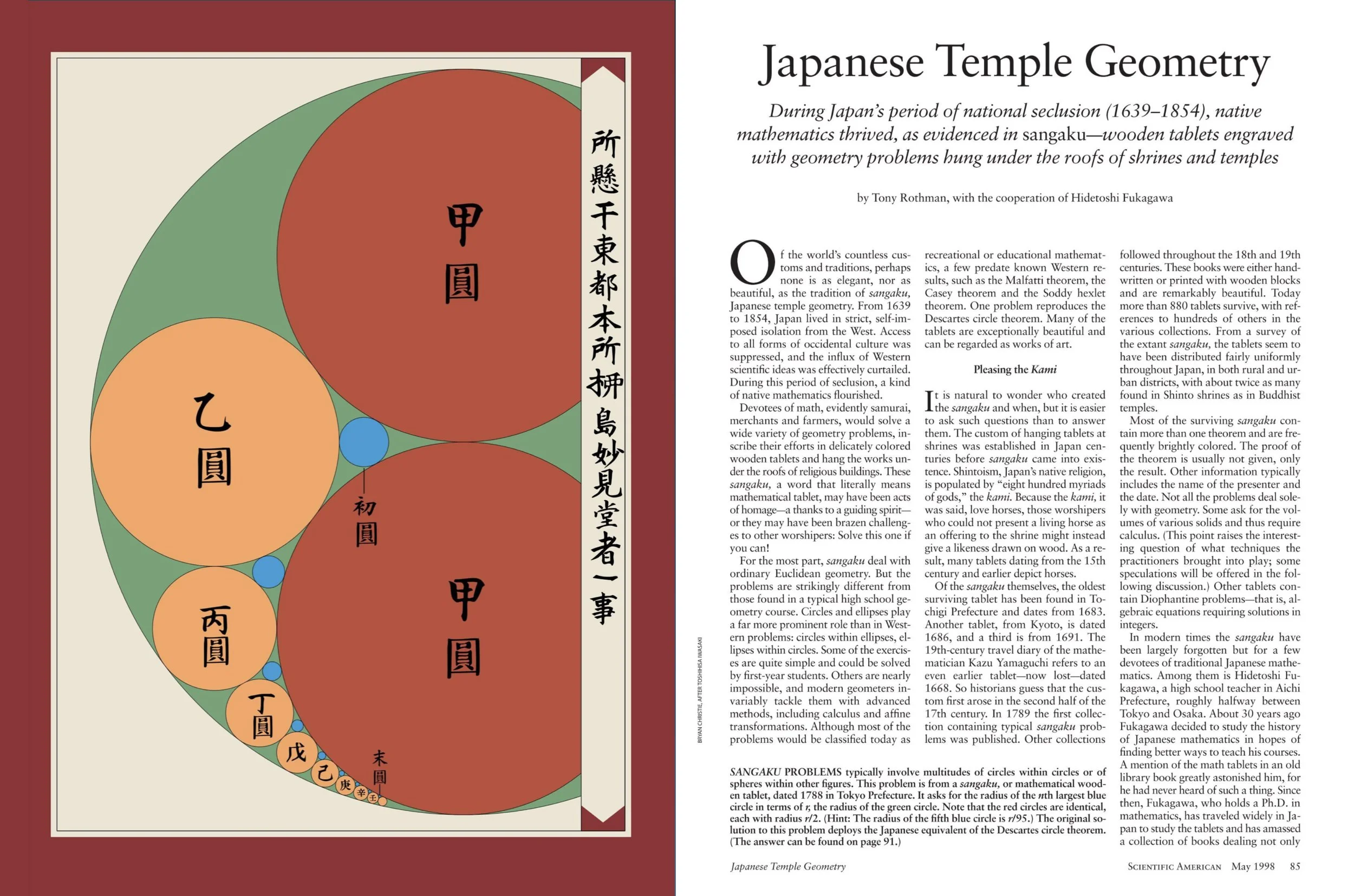
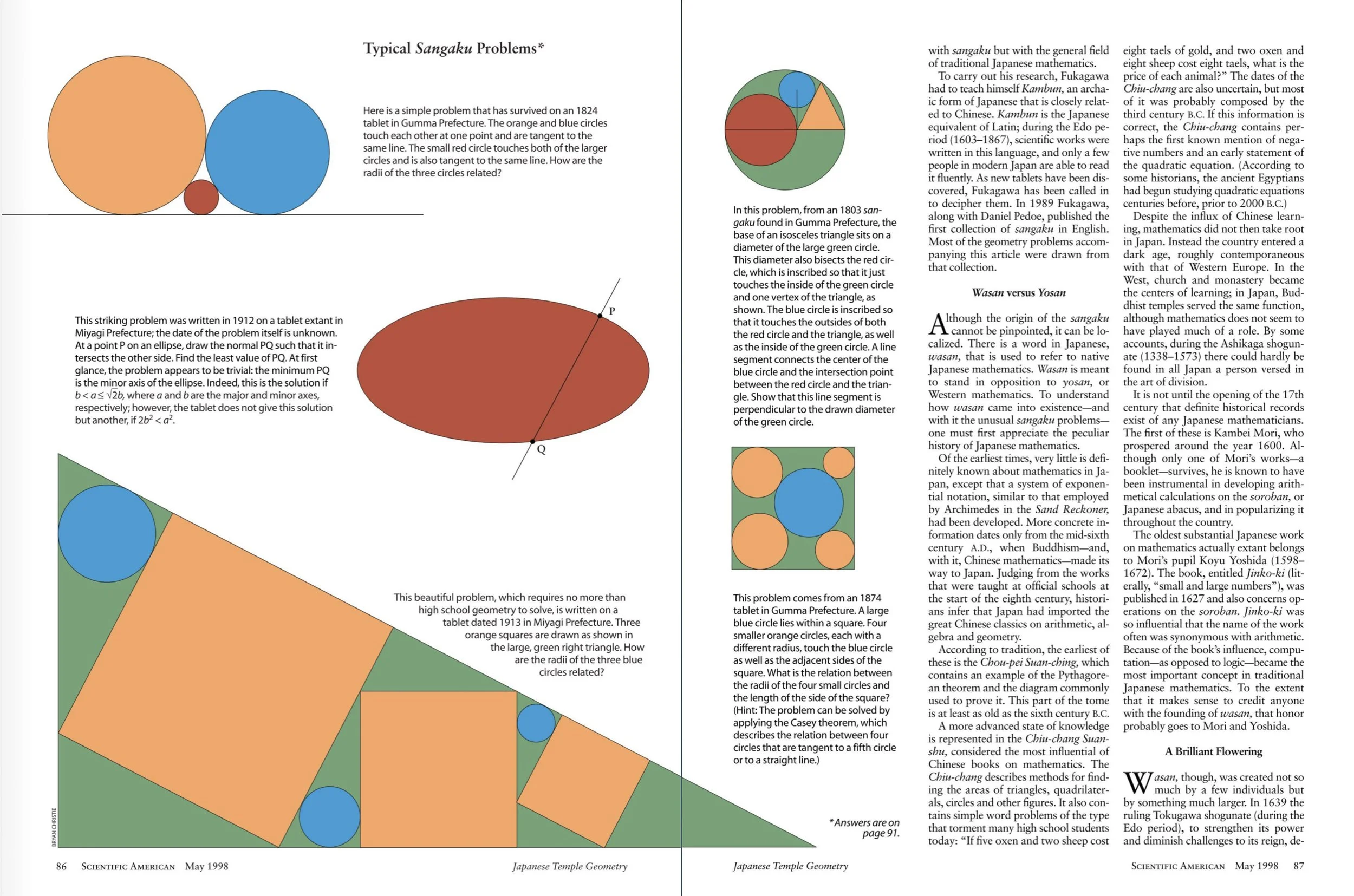
The clarity and order of the above geometrical examples, and at times the sheer wonder that would come over me as I drew these diagrams, was quite wonderful. It always feels like there’s some secret intelligence on the edge of being known when I grapple with geometric equations, tiling, etc. Maybe it could even be called spiritual.
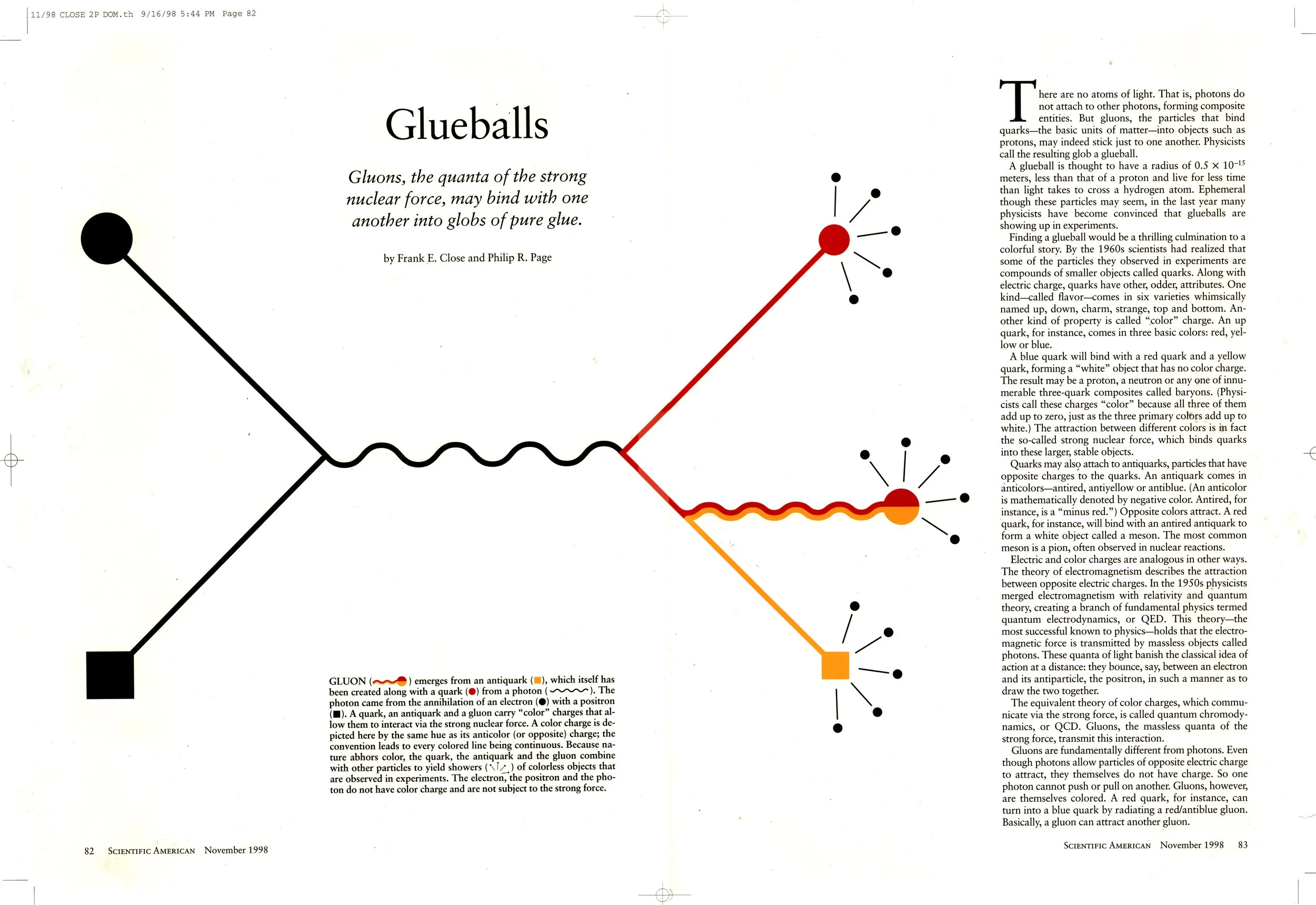
Here’s another example of the work I did in the ’90s after I became an assistant art director at Scientific American. This piece is possibly my favorite thing I have ever done to this day. I was assigned a story on physics titled “Glueballs.” Yes, you read that right, Glueballs. The authors of the article had provided us with hand-drawn Feynman diagrams, much like the images below, for reference:


I was immediately struck by these inscrutable little abstract diagrams. I knew they held meaning, secrets of how the universe worked, and the fact that I couldn’t logically understand them in my prefrontal cortex was not an issue. It reminded me of how I feel when I look at Japanese calligraphy. I can’t read Japanese calligraphy. Yet the combination of the artist’s hand, and a meaning that is present, stills my mind.
I am certain that on a fundamental level, we humans, to one extent or another, anthropomorphize everything. Everything. From our vehicles, to our pets, to our dolls, to our LLMs, and yes, even to the structure and rules that govern the universe. This is what came to mind as I looked at these Feynman diagrams. Was part of the pleasurable experience I was having looking at these diagrams due to the fact that I saw vague human stick-figure forms? Did what captivate me about them have to do with an unconscious trying to figure out what they were trying to tell me? I decided to run with that, and here’s what the opener of the story came out to be:
Long after completing this project, I came across this quote by Richard Feynman. For years, I had it taped to the studio wall by my easel:
“I wanted very much to learn to draw, for a reason that I kept to myself: I wanted to convey an emotion I have about the beauty of the world. It’s difficult to describe because it’s an emotion. It’s analogous to the feeling one has in religion that has to do with a god that controls everything in the universe: there’s a generality aspect that you feel when you think about how things that appear so different and behave so differently are all run ‘behind the scenes’ by the same organization, the same physical laws. It’s an appreciation of the mathematical beauty of nature, of how she works inside; a realization that the phenomena we see result from the complexity of the inner workings between atoms; a feeling of how dramatic and wonderful it is. It’s a feeling of awe — of scientific awe — which I felt could be communicated through a drawing to someone who had also had that emotion. I could remind him, for a moment, of this feeling about the glories of the universe.”
This quote. This damn quote gives me hope every time I read it. Feynman manages to tie together the Big Three (from a Lacanian perspective) of Science, Religion, and Art in as concise a way as I’ve ever come across. For years, I’ve been obsessed with the fact that the Big Three bring up the same sense of belonging and comfort. From this vantage, the three are more than siblings; they all feel like a beautifully human, desperate attempt to make sense of this absurdly complicated, terrifying, and gorgeous world.
As an aside, here’s a page from Feynman’s sketchbook. (An aside to this aside: As evinced in this page, Feynman often worked out equations in strip clubs. I believe he’d sometimes play bongos for the dancers.)

When I left Scientific American in 1999 to start my freelance illustration career, I was naively hoping to do these kinds of mathematical and physics diagrams and drawings. None of those opportunities materialized, and the only work I could get was in 3D illustration. Slowly, as my career evolved, I became recognized for my anatomical work, which you see all over this site. The memory of my love of physics was buried under the flush and excitement of the near-constant commissions I was receiving. Those years in the late ’90s when I was at SciAm I held close to my heart, but I I had grown jaded about ever doing that type of work again.
Recently, however, I was hired to do a number of illustrations for two articles on mathematics for Scientific American. The stories were initially titled “A New Mathematical Shape” and “The Most Endearing Shapes.” (Talk about anthropomorphizing!)
As I read through the two drafts and looked at the reference, that feeling of reverence and awe for this natural world and its expression stirred inside me.
Here’s an example of the reference I received:
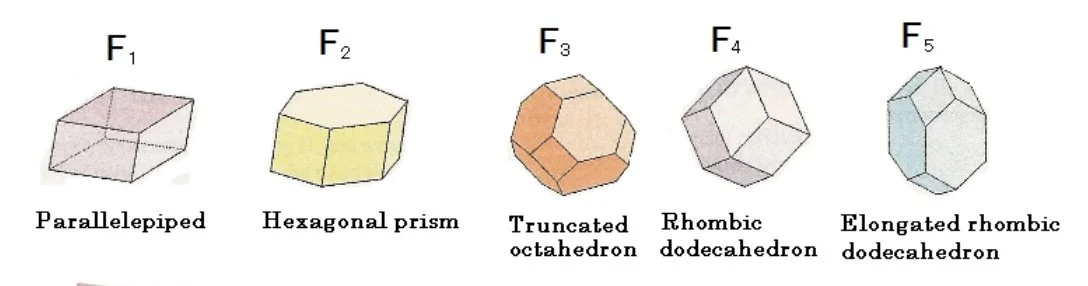
Those 3D shapes above remind me of jewels. Why not go with that? I decided to try to inject some new life into the 3D nature of the medium I was working in. Something to make it look “fresh” and even, well, alive. Maybe even respect these three-dimensional shapes as three-dimensional — that is, using 3D for everything it has to offer.
Here’s how the illustrations for “A New Mathematical Shape” turned out:
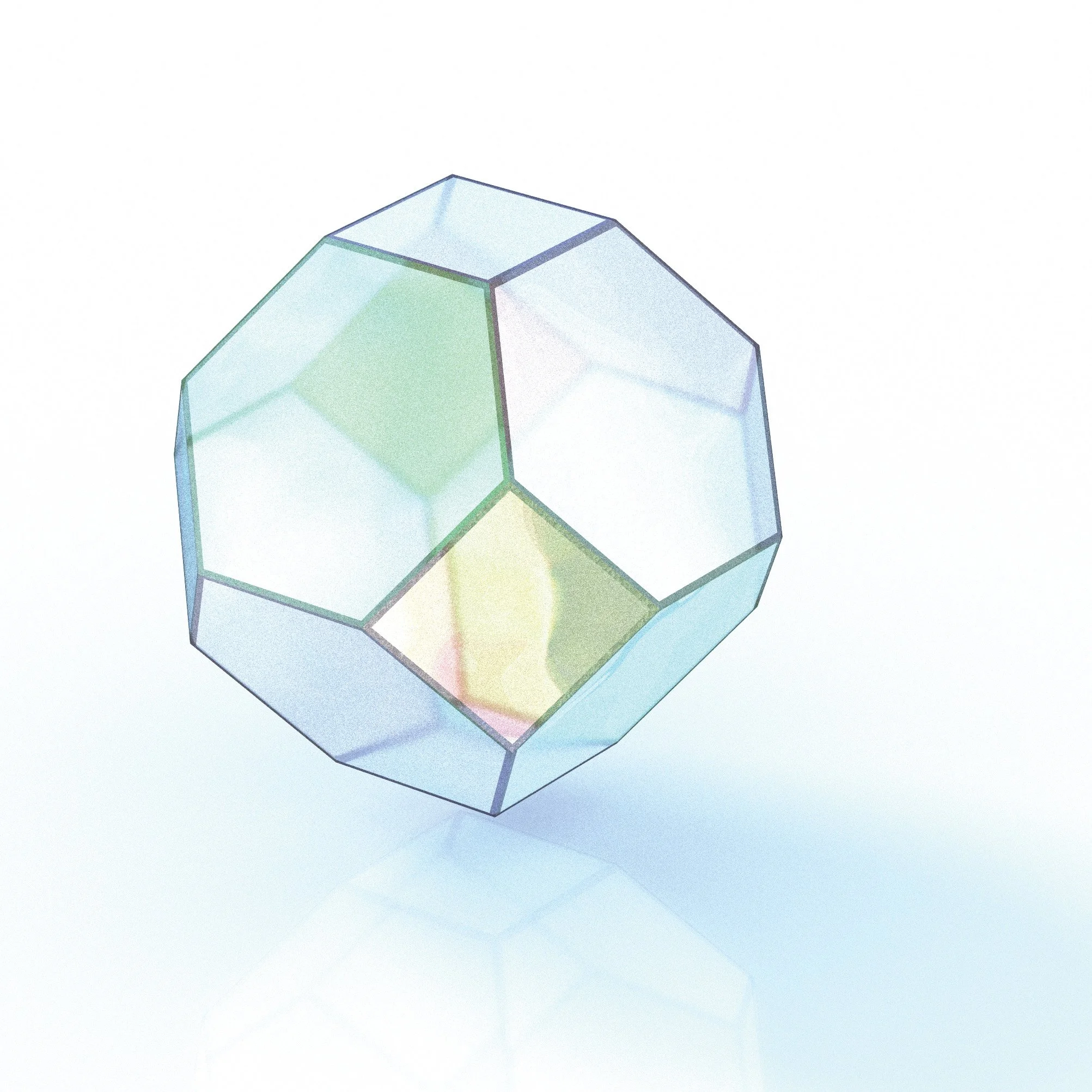

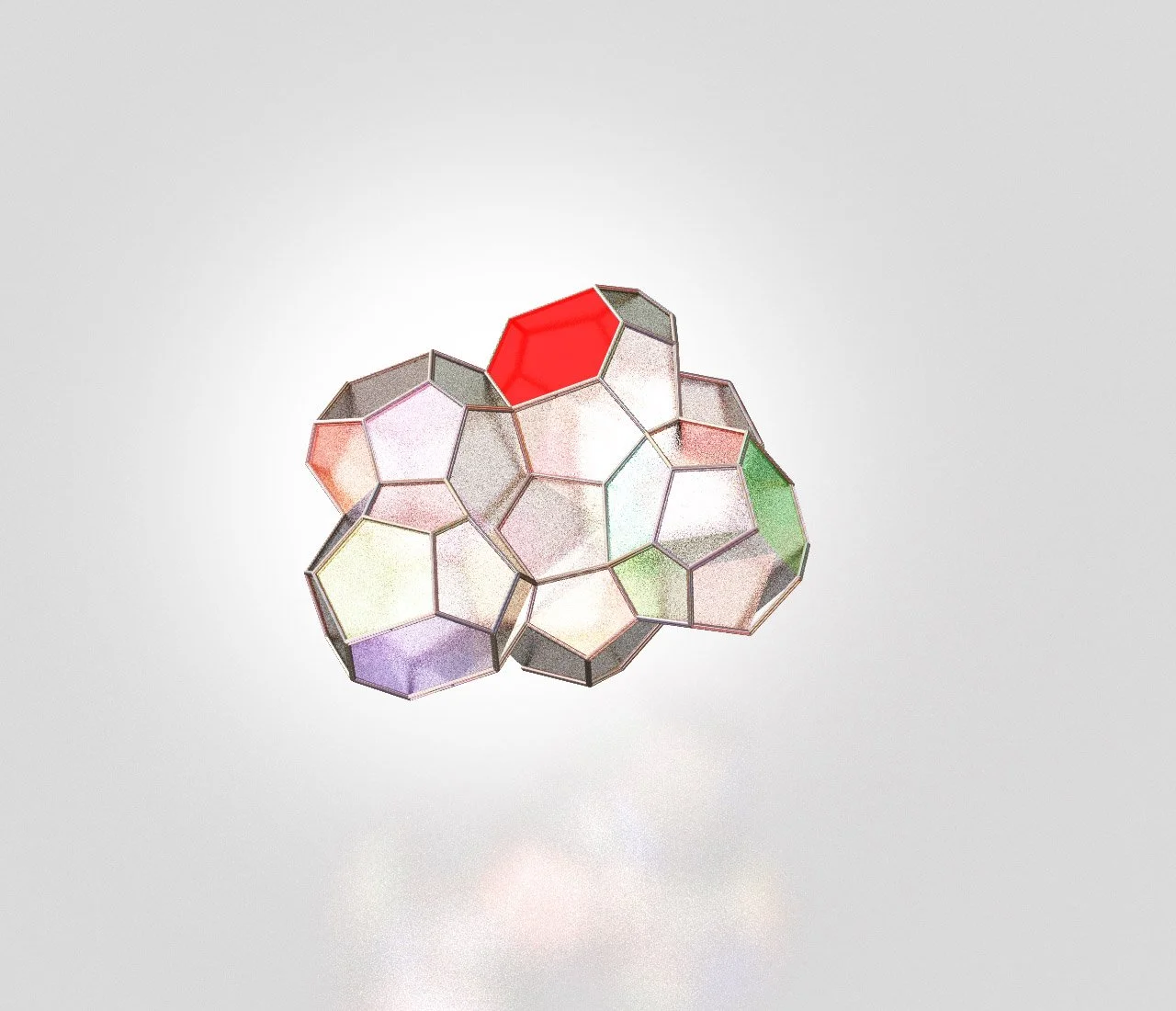
And here’s a spread from “The Most Endearing Shapes”:

The feedback I got from the folks at Sci Am was pretty wonderful. The general consensus was surprise that these shapes could look, so, well, sensual.
In fact, as I was working on these illustrations for the inside of the magazine, the creative director called and asked if I’d be interested in using one of these shapes for the cover. And here’s how the cover came out:
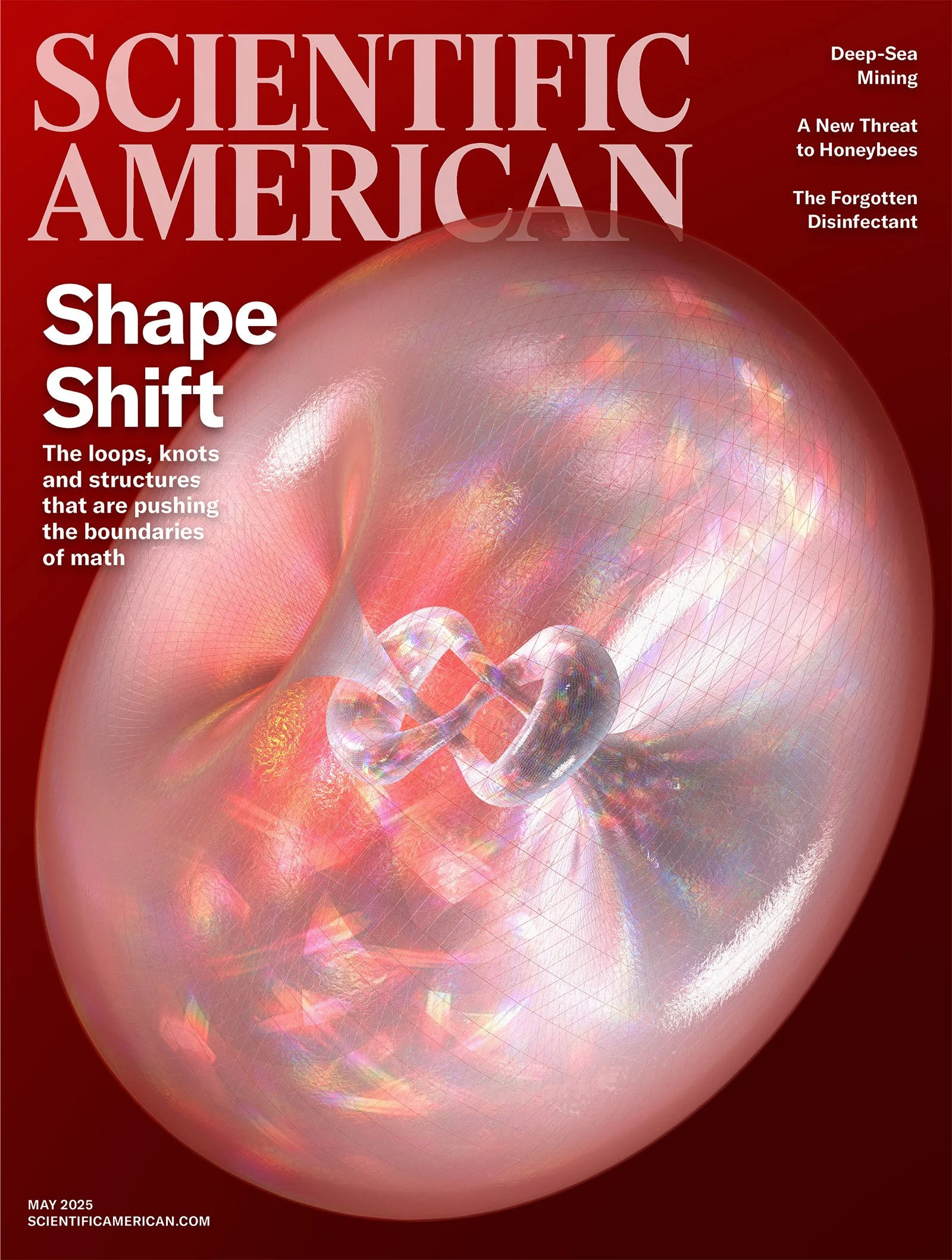
Back in the aughts, I was often commissioned to do covers for Newsweek magazine. For each issue back then, around three different covers were commissioned weekly in a cook-off that the editors would chose from. I can’t tell you how many times the magazine decided to run a photo of a person who was often a blandly attractive woman. (The general consensus was that people [read: sex] sold magazines.) But this time, with the cover above, a shape I had drawn made it! I was thrilled. Just look at her voluptuous and enticing curves. Bada-bing!