
The Blink of an Eye
“One thing is clear; there is no progress in art.”
—Willem de Kooning
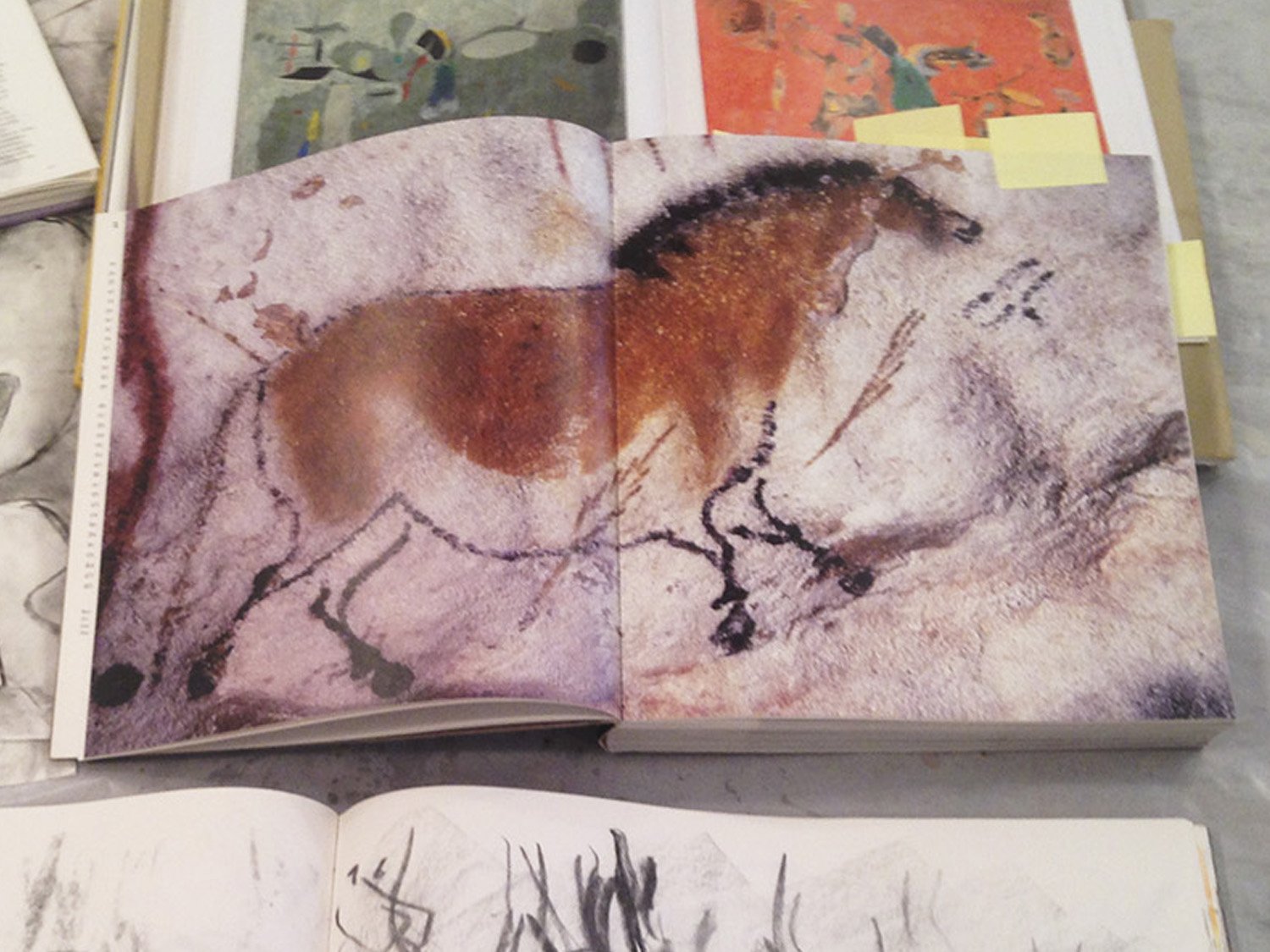
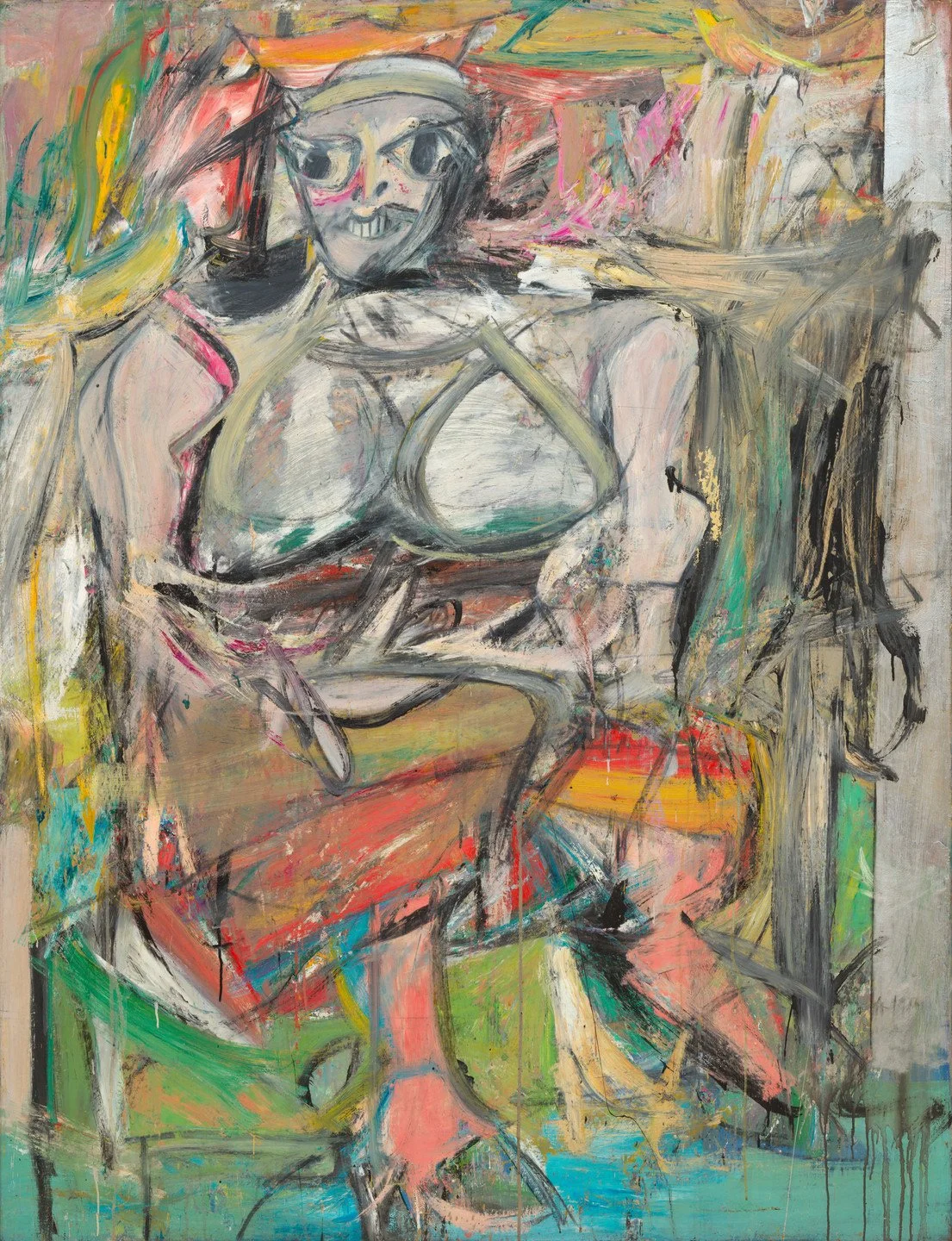
Something washes over me when I pick up a piece of charcoal and draw. It’s primal; I feel the distant call of thousands and thousands of years of ancestry. Maybe it’s because charcoal comes from one of our first technologies, the harnessing of fire.
I’ve always loved cave paintings. When looking at them, I experience a direct psychological expression of grappling with existence in a world vast, mysterious, and inexplicable. This work is not about taming the natural world, as is much of later European art; these animals are not “tamed” for use by humans. I can’t help but think this work is about survival, maybe even created in an effort to survive.
For 35,000 years, the aesthetics in these paintings were handed down from generation to generation; there is too much consistency in the work to prove otherwise. Think about that for a moment. These artists seemed not to care about “progress.” (Was progress even a notion they had?) I’ve heard people whine that nothing new has been done in the art world for decades. Decades? Compare that with 35,000 years!
We know about geological change taking place over eons. And yet, on the human scale, we think of 35,000 years as an eternity. We think of the paintings as ancient, yet the cave that has been painted on is virtually unchanged. So when looking at cave paintings, one is presented with the paradox of time: thousands of generations passing in the blink of an eye of Mother Earth.
Caves have no right angles. Did Paleolithic people know what a rectangle was? How often would they see a straight line? Perhaps the only time they witnessed a straight line was when looking out onto the ocean’s horizon. Or maybe they noticed the path of a falling object described a straight line. I look up from the rectangular screen of my laptop. I see the rectangle of the doorway into my kitchen, the rectangular windows letting light in. I inhabit a world of rectangles. Yet they are so ubiquitous I am unaware of them. At times, I’ve wondered what an alien would see if they were to visit one of our museums. I think they would wonder why there are so many rectangles on the walls.
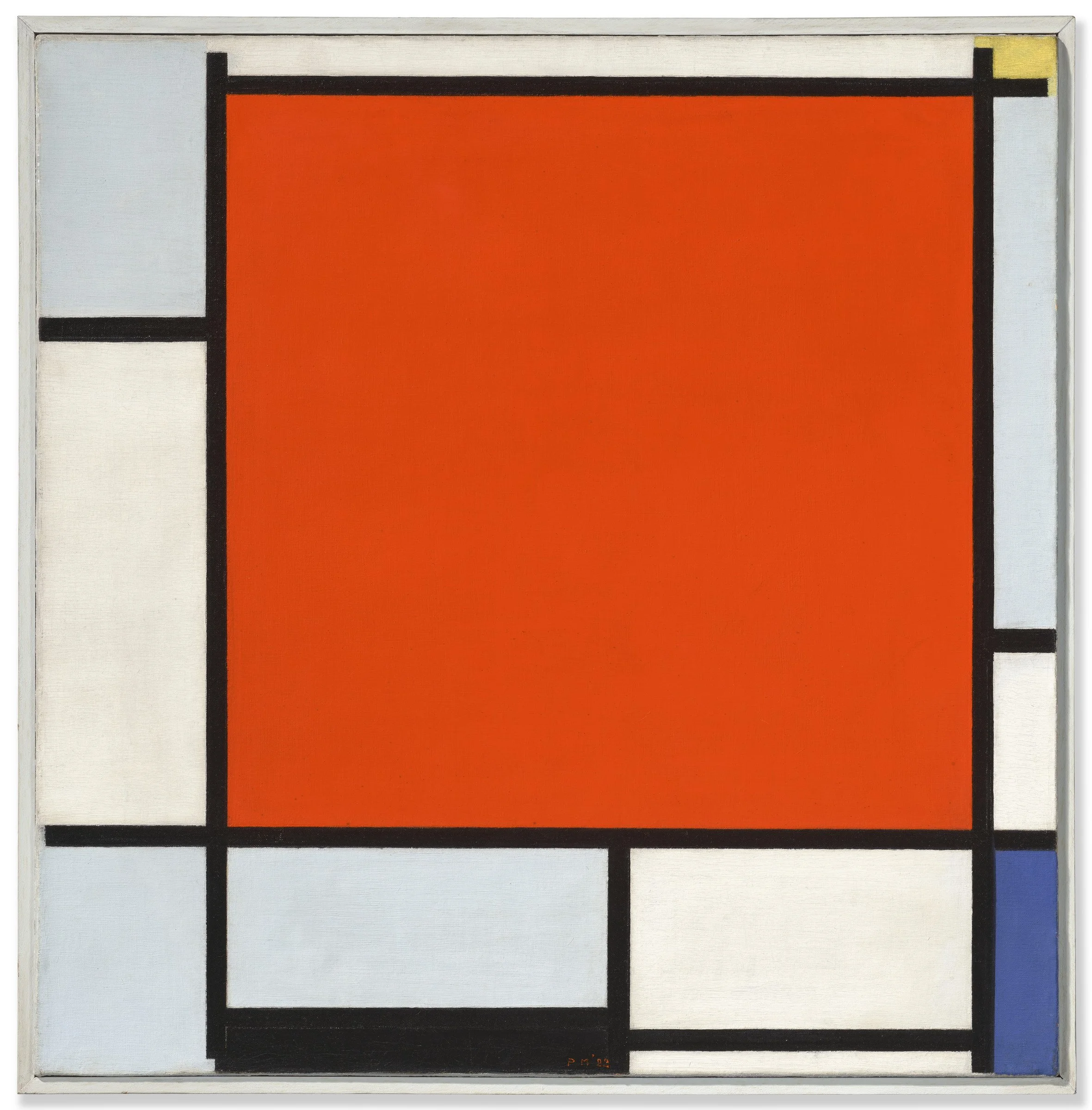
I was going to write that we’re prisoners of the rectangle. But something is giving me pause. When I look at a Mondrian, a calm comes over me. I’m witnessing the sacredness of the horizontal and vertical line. These straight lines hint at the perfection of physics, or at least how we experience physics: the vertical force of gravity; the horizontal line of stasis and rest. The right angle is a symbol of the sacred union of the activity of gravity and the stasis of rest.
In cave painting, I experience the sublime. The mystery, wonder, and terror of the physical world. In Mondrian, I experience the mystery of the laws that govern the physical world. The subject’s relevance dissolves in this experience. What is relevant is the mystery. The awe. The incomprehension and the inexplicable.
My finite mind tries to grasp the infinite and is left peering into the paradox of existence.